From Winnica Pustkowie to Mars: time to reveal some plans
On our blog, we usually write about what's happening at Kwiatowa 6: work in the vineyard, the weather, everyday life at Winnica Pustkowie. We have never mentioned our automation plans for vineyards here before – and more broadly, how we see the future of agriculture in Poland and around the world – even though we've been working on this for a long time. Perhaps this is finally the right moment to start talking about it.
Because the world of agriculture is changing faster than it seems. Droughts, downpours, temperature swings, May frosts – all of this means that traditional "intuition" is no longer enough. Winemaking, like all of agriculture, is beginning to rely on data, models, and analyses, not just on gut feeling. And it's not about replacing people with machines – it's about giving ourselves tools that allow us to act smarter, faster, and safer.
For some time now, we've been building a system designed to help not only us, but in the future also other Polish vineyards. A system that can predict frost before the first ice crystals even appear; assess the risk of diseases before we see the first symptoms; indicate the best moment for spraying; and on top of that, monitor crops from above – literally from space – and react where something starts going wrong.
This is not science fiction. It's a set of technologies that already work today: from our weather station and automatic alerts, through scripts that support keeping a work journal, to the first ideas for using satellite imagery. And importantly – all of this is being created here, at Winnica Pustkowie in Wołyńce-Kolonia, a place we've been building together from the very beginning.
Where did it all start? And why space?
We need to go back to the beginning of university studies – somewhere around 2001–2002. That's when I came across the Uranos Project on the internet. Today it's almost archaeology of the Polish internet, but back then it was one of the few sensibly described space colonization projects presented "our way": without Hollywood effects, but with a logical, engineering approach. A text like that can grab a person and hold them for a long time.
Since then, that vision has been sitting somewhere in the back of my mind – not as a dream of flying in a spacesuit, but as a conviction that technology can be more than just a tool for making money. It can be a tool for building the future, including beyond Earth.
Over time, those space threads didn't fade – they matured instead. Ania once brought me the book series "Red Mars," "Green Mars," "Blue Mars", which was really hard to find as a complete set at the time. That was another moment when the topic of Mars and colonization came back – this time not just as a scientific vision, but also as an imagination of what normal life could look like somewhere very far from here.
That's why the vineyard, technology, and those "Martian" inspirations have been our shared theme from the very beginning. We run both Winnica Pustkowie and other projects together, and although I'm more involved in automation on a daily basis, the result is shared: we want the systems we build to give us more time for family and more time for the passion of running a vineyard itself, not less. Pustkowie is our experimental field, but it should remain a place to live, not a laboratory without people.
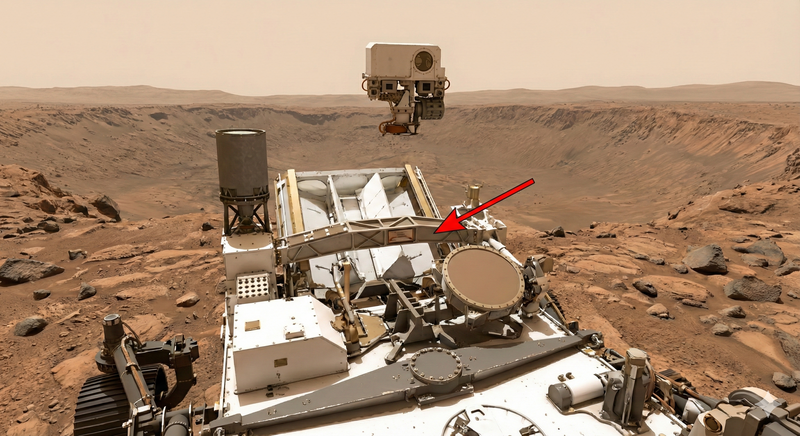
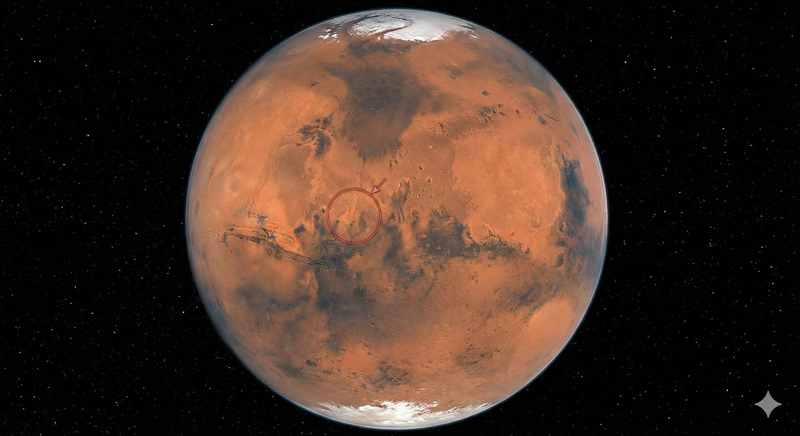
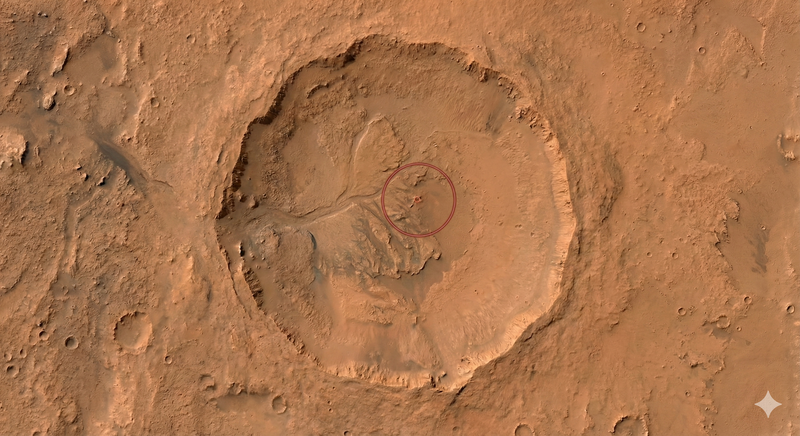
And by the way – our names are already on Mars. As part of NASA's "Send Your Name to Mars" campaign, our names flew aboard the Perseverance rover, on three tiny silicon chips that now stand in Jezero Crater. Earlier, my name also made it onto a chip on the InSight lander, which landed on Elysium Planitia in 2018 (watchmaker-level craftsmanship of microscopic font and an enormous mission).
And if any of you know the creators of the Uranos Project or know how to contact them – I would be grateful for a message. I'd love to tell them how far a spark thrown on the internet twenty years ago can travel.
What we're already building today (and why it's not science fiction)
Less talk, more substance. Here's where things stand today:
- Automatic weather station
Continuous measurement of temperature, humidity, rainfall, pressure, UV, wind speed, and dew point. Everything records itself automatically. - Frost alerts and predictions
The system monitors temperature drop trends and can warn earlier than standard forecasts. - Disease risk models
Analysis of conditions for powdery and downy mildew, infection points, and spray windows – still in working versions for now, but already helping with decision-making. - Integration with the sprinkler system
Real water management in practice. We know very well how much it matters when a frosty night arrives.
None of this is detached from reality. Systems like these will be commonplace in Polish farms in the coming years. We simply started putting it together earlier – because the climate and our real needs demand it.
What are we working on next? The next pieces of the puzzle include a truly automatic work journal (to write less and do more) and the use of satellite analysis and indices such as NDVI, which will allow us to see problems in the vineyard from above before we notice them from the ground. That's still ahead of us, but the direction is clear.
An inspiration that came back: Mars Vineyard – Make Wine, Not War
In this puzzle, there appeared one more, somewhat surprising element: the Mars Vineyard project, submitted to the Mars City Design competition.
I came across this project recently and immediately felt that someone had put together on one board things that had been floating around in my head for years: agriculture, wine, and space. The authors wrote:
"Wine is one of the oldest products of culture - so it should be one of the first products of culture in space."
And suddenly it turned out that it doesn't sound like a joke at all. Because people always take their culture with them. If we really will someday live farther than the ISS orbit, we'll want to bring not just solar panels and equipment, but also a piece of normality: working with plants, the ritual of harvest, fermentation, a glass of wine.
Technically, Mars Vineyard consists of automation, sensors, atmosphere control, cultivation in a mix of hydroponics and regolith, energy and water management, and the idea of selling the limited amount of Martian wine on Earth as an ultra-limited product. The foundations are very down-to-earth – it's simply well-designed, precise agriculture in an extreme environment. Which is exactly what we're learning step by step here.
Subscriptions, seedlings, and sales – what might come next
Looking a bit ahead, we see this not just as a "tool for one vineyard," but as something that in the future could work as a subscription model: a package of software + hardware + planting material + support in selling the harvest. Not just another app, but a concrete kit for running a crop – from sensors and controllers, through algorithms, to what to do with the finished harvest.
This is obviously a perspective for the coming years, not for next season. But it's good to have such a direction: first we test solutions on our own vineyard, then at others', and when we know it works – we build from it a simple offer for farmers who don't want to spend their lives buried in paperwork and spreadsheets, but in their farm.
Where is all of this heading
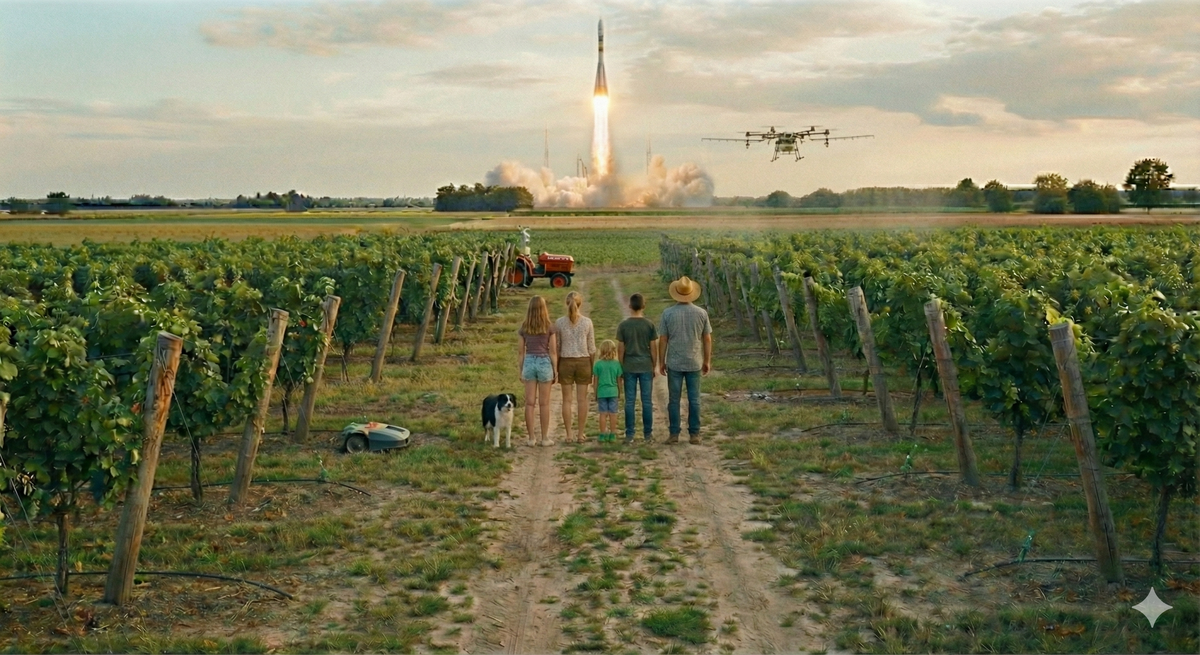
It's not that we're planning a Martian vineyard. It's that technology is developing in this direction, and we want to be part of it: today at Winnica Pustkowie, tomorrow at other vineyards in Poland, and someday – who knows – perhaps also in agricultural systems operating in conditions we can't even properly imagine today.
And most importantly: automation is meant to make life easier for us and other winemakers, not to complicate it. To give more time for family. More time for the actual work with grapevines, and less for paperwork and stress.
Maybe this sounds serious, but at its core, it's about simple things: about running a vineyard smarter. And about doing it together.
Will all of this succeed? We'll see. But one thing we know for sure: this is a good moment to finally talk about it.